You should not have to search through three cupboards to find a bandage or guess where a family member keeps their medication list. A little preparation can make those moments easier.
Family Medical Ready helps you organize first aid supplies, prepare important health information, and plan for interruptions to everyday care. Whether you are putting together your first household kit or helping an older relative prepare for a power outage, start with practical steps that fit your family.
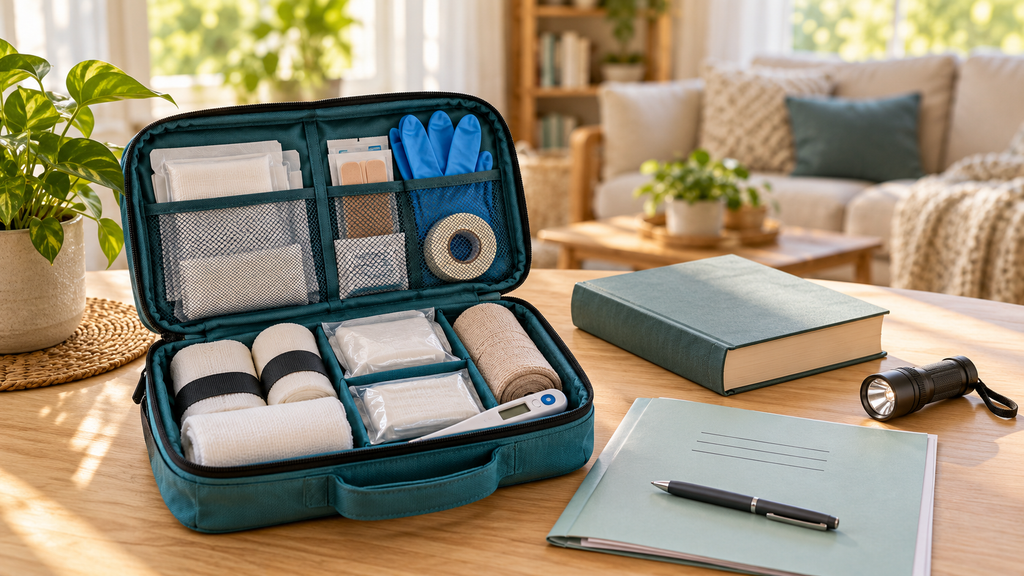
Prefer a printed reference to keep alongside your supplies? Explore The Home Doctor: Practical Medicine for Every Household and see whether its contents suit your preparation needs.
We may earn a commission from purchases through our affiliate links.
You do not need to buy everything at once. Begin with what you already have, identify the gaps, and make sure the people in your home know where to find help.
If you are starting from scratch, follow our home medical preparedness guide. It brings the main tasks together in a manageable order.
Start With These Four Things
A useful household plan answers four questions:
- What supplies do we have?
- Where is our important health information?
- Who would we contact for help?
- What would change if we lost power or had to leave home?
These questions give you a better starting point than a shopping list alone. A well-stocked box has limited value if nobody can find it. A medication list needs updating when a prescription changes. Equipment that depends on electricity needs a plan for an interruption.
Choose one task today. You might check your first aid kit, write down pharmacy details, or ask a relative where they keep their medical information.
Small, completed tasks are easier to maintain than an ambitious plan that stays unfinished.
Build a First Aid Kit Your Household Can Use
A first aid kit should be organized around your household’s needs and the supplies you know how to use.
The American Red Cross recommends keeping a kit at home and in your car, with supplies suited to your family. Its suggested contents include items such as dressings, bandages, gloves, and first aid instructions.
Our first aid kit checklist helps you work through the essentials without treating a large piece count as proof of a useful kit.
Check what you already own
Before ordering a new kit, gather your existing supplies in one place. Look for damaged packaging, missing items, and anything you cannot identify.
You may discover that you already have most of the basics but need a better container or a few replacements. Alternatively, a premade kit may offer a convenient starting point.
Our comparison of DIY and premade first aid kits explains how to compare contents, organization, and the work involved in maintaining each option.
Make the contents easy to find
Imagine asking someone else to retrieve a dressing from your kit. Would they know which pocket to open?
Group similar supplies together and keep labels readable. Store instructions where they are easy to reach. Avoid filling every space so tightly that you must unpack the whole kit to find one item.
If the names on supply lists are unfamiliar, read our guide to first aid supplies, including dressings, tape, and gloves.
Give the kit a regular check
Supplies get used and are not always replaced. Packaging can become damaged, and some items have expiry dates.
Choose a reminder you will notice, then follow the same short routine each time. Our guide to checking and restocking a first aid kit gives you a repeatable process.
Organize Your Home Medical Supplies
Household medical supplies often accumulate gradually: a thermometer in a drawer, dressings left over from an injury, and a folder of instructions stored somewhere else.
Bringing order to those items helps you see what you have and what needs attention.
Start with our home medical supplies guide. It separates everyday preparation from equipment that should be selected with professional advice.
Choose a sensible storage area
Your storage arrangement should account for the instructions on each product, access by children, and who needs to retrieve the supplies.
You do not necessarily need a dedicated room or an expensive cabinet. A clearly organized space can be enough.
Our guide to building a home medical station explains how to bring supplies and information together while keeping items in suitable storage conditions.
Keep your budget focused
It is easy to spend money on unfamiliar equipment while overlooking simple gaps.
Before each purchase, ask:
- What need does this item meet?
- Does anyone in the household know how to use it?
- Does it require replacement parts or maintenance?
- Is professional advice needed before buying it?
For a practical starting order, see home medical preparedness on a budget.
The aim is a setup you understand and can maintain.
Put Medication Planning on Your Checklist
Medication preparation involves more than having a few boxes in a cupboard. Your family may need clear records, suitable storage, and a plan for contacting the usual prescriber or pharmacy during disruption.
The FDA advises including medical conditions, supply needs, and allergies in emergency planning, particularly when power interruptions could affect care.
Our medicine storage and emergency planning guide introduces the main decisions to discuss.
Create a clear medication list
Could someone helping your family find an up-to-date record of the medicines each person takes?
A list can bring together names, prescribed directions, allergies, and contact details. Confirm uncertain information with the relevant healthcare professional.
Follow our guide to creating a family medication list and make updating it part of your routine whenever treatment changes.
Check storage instructions
Different medicines can have different storage requirements. Use the label and product instructions, and ask a pharmacist if anything is unclear.
Our guide to where to store medicines at home helps you review your arrangements and identify questions worth asking.
Plan for interruptions before they happen
If someone relies on a medicine with particular temperature requirements, a power outage deserves advance planning.
Record who to contact and ask for advice specific to the product. Avoid assuming that one general storage rule applies to every medicine.
Start with medication planning before a power outage and our list of emergency prescription planning questions for your pharmacist.
Keep Useful Information Available Offline
When you need information quickly, a phone with a flat battery is an inconvenient place to keep the only copy.
Consider which details your household should be able to access without an internet connection. These might include emergency contacts, a medication list, equipment instructions, and a family meeting plan.
A printed reference can also be part of this arrangement, provided you understand its scope and limitations.
Considering a household medical reference? View The Home Doctor’s product information and available formats before deciding whether it belongs in your home reference collection.
The seller presents The Home Doctor as a guide for situations where medical assistance is unavailable or delayed. Its homepage also states that it should not be the first line of defence when medical services are available.
A book serves a different purpose from a first aid course or advice about your own medical needs. Our guide to home medical reference books explains what to look for, including clear instructions, identifiable sources, and an appropriate scope.
You can also compare The Home Doctor with a first aid manual to understand the differences before buying.
Make a Family Medical Emergency Plan
A plan becomes useful when the people involved understand it.
Think through an ordinary weekday. Someone may be at work, a child may be with another caregiver, and an older relative may be home alone. Who has the information each person might need?
Our family medical emergency plan helps you organize responsibilities and contact details.
Bring essential records together
Keep an accessible record of the information someone assisting you may need. Protect sensitive details and tell trusted family members how to find the records.
Our emergency medical information guide explains how to structure that record.
For families coordinating care, a caregiver emergency folder can help keep instructions and contact details together.
Think through leaving home
If you had to leave at short notice, which health-related items would need to come with you?
Make the list in advance and distinguish between items already packed and those you use every day.
Use our medical evacuation packing list to build a version that reflects your household.
Discuss the plan
A folder cannot answer every practical question. Talk through who would collect essential items, who would help a relative, and how you would communicate if normal arrangements changed.
Keep the discussion specific. “The contact list is in the front pocket of this folder” is more useful than “Everything is somewhere in the cupboard.”
Prepare Around Older Relatives and Individual Needs
A generic checklist is only a starting point. Your plan should reflect the people who will use it.
For an older relative, consider everyday routines, mobility, communication, medication access, and the help they would need if their usual caregiver were unavailable.
Our emergency preparedness guide for seniors helps families work through those questions together.
Plan around equipment
If someone uses powered medical equipment, ask the supplier and care team about an appropriate backup and interruption plan.
Record the relevant contact details and keep instructions available. Our guide to medical equipment and power outages provides a framework for that conversation.
Account for distance from help
Rural households may need to think carefully about communication, transport, and access to regular services.
That planning should focus on reaching appropriate help and maintaining essential arrangements. Read preparing for delayed medical help in rural areas for the main considerations.
Pair Supplies With First Aid Learning
Buying a kit and learning first aid are separate tasks.
A course gives you a structured opportunity to learn, ask questions, and practise skills appropriate to the training offered. When comparing options, check the provider, course scope, practical component, and any renewal requirements.
Our guide to choosing a first aid course for your family helps you make that comparison.
Keep suitable instructions with your supplies, too. Our comparison of printed first aid guides and apps looks at access, updates, and preparing for times when a device or connection is unavailable.
A Manageable First Week
You can begin without turning preparation into a large project.
Day 1: Find your supplies
Locate the first aid kit and other household medical items. Write down what is missing or needs checking.
Day 2: Choose a storage arrangement
Make the supplies easier to identify and retrieve, following product storage instructions.
Day 3: Gather contact details
Record your usual healthcare contacts and the emergency service details relevant to where you live.
Day 4: Review medication information
Bring records up to date and note questions for your pharmacist or prescriber.
Day 5: Talk through a disruption
Choose one realistic situation, such as a power outage or leaving home at short notice. Identify the arrangements that need attention.
Day 6: Review learning resources
Look at first aid training and decide which reference material would be useful offline.
Day 7: Set a reminder
Choose a regular time to review supplies, records, and contact details. Our home medical supplies check gives you a practical review routine.
How to Use Family Medical Ready
Start with the guide that solves your immediate problem:
- Building your first kit? Use the first aid kit checklist.
- Unsure what to keep at home? Read the home medical supplies guide.
- Organizing regular medicines? Begin with medicine storage and emergency planning.
- Helping your family coordinate? Create a family medical emergency plan.
- Choosing a printed resource? Explore home medical reference books.
Our guides focus on preparation, clear organization, and useful questions to ask professionals. Health information is educational and does not replace individual medical advice, diagnosis, or treatment. In an emergency, contact local emergency services promptly.
Take One Useful Step Today
Open your first aid kit. Update one contact number. Ask a family member where their medication list is kept.
Each completed step makes your household plan more practical. You can add to it as your needs change.
If a printed reference is your next step, take a closer look at The Home Doctor. Review its contents and suitability alongside your household’s supplies, training, and professional care arrangements.
For a clear place to begin, follow our home medical preparedness starting guide.